
E-COMMERCE INFRASTRUCTURE BUYER GUIDE | INDEPENDENT EDITORIAL REVIEW
For readers comparing online store options, IWIHOST official website is the starting point for checking current product terms, technical specifications and regional availability. This review focuses on the decisions that matter after a provider catches your attention: how to verify claims, calculate operating costs and identify avoidable deployment risks.
For additional background, IWIHOST worldwide VPS hosting review provides a second route to relevant provider information. Both links appear in this introduction; the remaining article is designed to be useful even when pricing, inventory or marketing claims change.
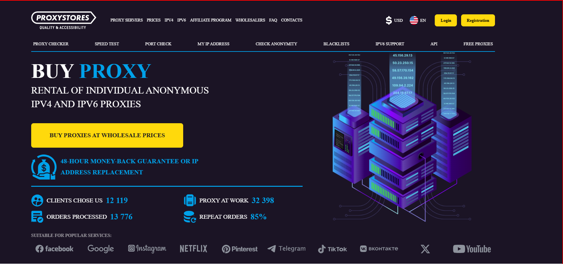
IWIHOST homepage screenshot supplied for this review. Visible promotions and figures may change.
Executive assessment: what this provider should be judged on
IWIHOST is relevant to a online store workflow, but a professional buying decision should not rest on a homepage headline or a single attractive specification. The right evaluation asks whether the service can support the exact workload, whether its operational controls are sufficiently transparent, and whether failures can be diagnosed quickly. A plan that looks economical on paper may become costly when teams spend hours dealing with unreliable access, unclear billing, or missing support information.
This article separates observable marketing statements from testable operating requirements. The screenshot documents how IWIHOST presents itself; it is not proof of throughput, uptime, anonymity, or customer satisfaction. No controlled benchmark or paid account trial is represented as having been performed here. Instead, the framework below shows what an informed buyer should verify before committing production work.
See also: How to Prepare for a Salary Negotiation
1. Checkout Availability: what to examine
In a online store deployment, checkout availability deserves its own acceptance criteria. Begin by writing down the user-facing outcome that would be damaged if this area fails. Identify the dependency, its owner, and a measurable threshold. For example, the team might track success rates, regional consistency, response times, recovery duration, or the proportion of records requiring manual correction. The threshold should reflect business impact rather than a vendor marketing benchmark.
A useful test for checkout availability starts with a small, representative sample. Record the starting configuration, location, time window, software version, request pattern and any relevant external dependencies. Repeat the same checks under ordinary and stressed conditions. A single successful request is not enough: variability, intermittent errors and recovery behavior often determine whether the service is practical. Keep raw observations and distinguish a service-side problem from a local application, network or configuration issue.
Ask IWIHOST for the current documentation that governs checkout availability, including any limits, exclusions, replacement rules or support escalation steps. Where the public website does not provide enough detail, request written clarification before purchasing. Do not assume that a stated feature is included in every plan or geography. For procurement, the strongest evidence is a reproducible result paired with a written term, not an unsupported numerical claim.
2. Payment Gateway Callbacks: what to examine
In a online store deployment, payment gateway callbacks deserves its own acceptance criteria. Begin by writing down the user-facing outcome that would be damaged if this area fails. Identify the dependency, its owner, and a measurable threshold. For example, the team might track success rates, regional consistency, response times, recovery duration, or the proportion of records requiring manual correction. The threshold should reflect business impact rather than a vendor marketing benchmark.
A useful test for payment gateway callbacks starts with a small, representative sample. Record the starting configuration, location, time window, software version, request pattern and any relevant external dependencies. Repeat the same checks under ordinary and stressed conditions. A single successful request is not enough: variability, intermittent errors and recovery behavior often determine whether the service is practical. Keep raw observations and distinguish a service-side problem from a local application, network or configuration issue.
Ask IWIHOST for the current documentation that governs payment gateway callbacks, including any limits, exclusions, replacement rules or support escalation steps. Where the public website does not provide enough detail, request written clarification before purchasing. Do not assume that a stated feature is included in every plan or geography. For procurement, the strongest evidence is a reproducible result paired with a written term, not an unsupported numerical claim.
3. Inventory Synchronization: what to examine
In a online store deployment, inventory synchronization deserves its own acceptance criteria. Begin by writing down the user-facing outcome that would be damaged if this area fails. Identify the dependency, its owner, and a measurable threshold. For example, the team might track success rates, regional consistency, response times, recovery duration, or the proportion of records requiring manual correction. The threshold should reflect business impact rather than a vendor marketing benchmark.
A useful test for inventory synchronization starts with a small, representative sample. Record the starting configuration, location, time window, software version, request pattern and any relevant external dependencies. Repeat the same checks under ordinary and stressed conditions. A single successful request is not enough: variability, intermittent errors and recovery behavior often determine whether the service is practical. Keep raw observations and distinguish a service-side problem from a local application, network or configuration issue.
Ask IWIHOST for the current documentation that governs inventory synchronization, including any limits, exclusions, replacement rules or support escalation steps. Where the public website does not provide enough detail, request written clarification before purchasing. Do not assume that a stated feature is included in every plan or geography. For procurement, the strongest evidence is a reproducible result paired with a written term, not an unsupported numerical claim.
| Check | Evidence to collect | Decision rule |
| Baseline | Configuration and time-stamped result | Meets minimum need |
| Stress case | Repeated results and error logs | Failure mode acceptable |
| Recovery | Support response and retest | Clear path to restore service |
4. Peak-Sale Traffic: what to examine
In a online store deployment, peak-sale traffic deserves its own acceptance criteria. Begin by writing down the user-facing outcome that would be damaged if this area fails. Identify the dependency, its owner, and a measurable threshold. For example, the team might track success rates, regional consistency, response times, recovery duration, or the proportion of records requiring manual correction. The threshold should reflect business impact rather than a vendor marketing benchmark.
A useful test for peak-sale traffic starts with a small, representative sample. Record the starting configuration, location, time window, software version, request pattern and any relevant external dependencies. Repeat the same checks under ordinary and stressed conditions. A single successful request is not enough: variability, intermittent errors and recovery behavior often determine whether the service is practical. Keep raw observations and distinguish a service-side problem from a local application, network or configuration issue.
Ask IWIHOST for the current documentation that governs peak-sale traffic, including any limits, exclusions, replacement rules or support escalation steps. Where the public website does not provide enough detail, request written clarification before purchasing. Do not assume that a stated feature is included in every plan or geography. For procurement, the strongest evidence is a reproducible result paired with a written term, not an unsupported numerical claim.
5. Database Restoration: what to examine
In a online store deployment, database restoration deserves its own acceptance criteria. Begin by writing down the user-facing outcome that would be damaged if this area fails. Identify the dependency, its owner, and a measurable threshold. For example, the team might track success rates, regional consistency, response times, recovery duration, or the proportion of records requiring manual correction. The threshold should reflect business impact rather than a vendor marketing benchmark.
A useful test for database restoration starts with a small, representative sample. Record the starting configuration, location, time window, software version, request pattern and any relevant external dependencies. Repeat the same checks under ordinary and stressed conditions. A single successful request is not enough: variability, intermittent errors and recovery behavior often determine whether the service is practical. Keep raw observations and distinguish a service-side problem from a local application, network or configuration issue.
Ask IWIHOST for the current documentation that governs database restoration, including any limits, exclusions, replacement rules or support escalation steps. Where the public website does not provide enough detail, request written clarification before purchasing. Do not assume that a stated feature is included in every plan or geography. For procurement, the strongest evidence is a reproducible result paired with a written term, not an unsupported numerical claim.
6. Server Regions: what to examine
In a online store deployment, server regions deserves its own acceptance criteria. Begin by writing down the user-facing outcome that would be damaged if this area fails. Identify the dependency, its owner, and a measurable threshold. For example, the team might track success rates, regional consistency, response times, recovery duration, or the proportion of records requiring manual correction. The threshold should reflect business impact rather than a vendor marketing benchmark.
A useful test for server regions starts with a small, representative sample. Record the starting configuration, location, time window, software version, request pattern and any relevant external dependencies. Repeat the same checks under ordinary and stressed conditions. A single successful request is not enough: variability, intermittent errors and recovery behavior often determine whether the service is practical. Keep raw observations and distinguish a service-side problem from a local application, network or configuration issue.
Ask IWIHOST for the current documentation that governs server regions, including any limits, exclusions, replacement rules or support escalation steps. Where the public website does not provide enough detail, request written clarification before purchasing. Do not assume that a stated feature is included in every plan or geography. For procurement, the strongest evidence is a reproducible result paired with a written term, not an unsupported numerical claim.
| Check | Evidence to collect | Decision rule |
| Baseline | Configuration and time-stamped result | Meets minimum need |
| Stress case | Repeated results and error logs | Failure mode acceptable |
| Recovery | Support response and retest | Clear path to restore service |
7. Application Monitoring: what to examine
In a online store deployment, application monitoring deserves its own acceptance criteria. Begin by writing down the user-facing outcome that would be damaged if this area fails. Identify the dependency, its owner, and a measurable threshold. For example, the team might track success rates, regional consistency, response times, recovery duration, or the proportion of records requiring manual correction. The threshold should reflect business impact rather than a vendor marketing benchmark.
A useful test for application monitoring starts with a small, representative sample. Record the starting configuration, location, time window, software version, request pattern and any relevant external dependencies. Repeat the same checks under ordinary and stressed conditions. A single successful request is not enough: variability, intermittent errors and recovery behavior often determine whether the service is practical. Keep raw observations and distinguish a service-side problem from a local application, network or configuration issue.
Ask IWIHOST for the current documentation that governs application monitoring, including any limits, exclusions, replacement rules or support escalation steps. Where the public website does not provide enough detail, request written clarification before purchasing. Do not assume that a stated feature is included in every plan or geography. For procurement, the strongest evidence is a reproducible result paired with a written term, not an unsupported numerical claim.
8. Capacity Reservations: what to examine
In a online store deployment, capacity reservations deserves its own acceptance criteria. Begin by writing down the user-facing outcome that would be damaged if this area fails. Identify the dependency, its owner, and a measurable threshold. For example, the team might track success rates, regional consistency, response times, recovery duration, or the proportion of records requiring manual correction. The threshold should reflect business impact rather than a vendor marketing benchmark.
A useful test for capacity reservations starts with a small, representative sample. Record the starting configuration, location, time window, software version, request pattern and any relevant external dependencies. Repeat the same checks under ordinary and stressed conditions. A single successful request is not enough: variability, intermittent errors and recovery behavior often determine whether the service is practical. Keep raw observations and distinguish a service-side problem from a local application, network or configuration issue.
Ask IWIHOST for the current documentation that governs capacity reservations, including any limits, exclusions, replacement rules or support escalation steps. Where the public website does not provide enough detail, request written clarification before purchasing. Do not assume that a stated feature is included in every plan or geography. For procurement, the strongest evidence is a reproducible result paired with a written term, not an unsupported numerical claim.
9. Incident Response: what to examine
In a online store deployment, incident response deserves its own acceptance criteria. Begin by writing down the user-facing outcome that would be damaged if this area fails. Identify the dependency, its owner, and a measurable threshold. For example, the team might track success rates, regional consistency, response times, recovery duration, or the proportion of records requiring manual correction. The threshold should reflect business impact rather than a vendor marketing benchmark.
A useful test for incident response starts with a small, representative sample. Record the starting configuration, location, time window, software version, request pattern and any relevant external dependencies. Repeat the same checks under ordinary and stressed conditions. A single successful request is not enough: variability, intermittent errors and recovery behavior often determine whether the service is practical. Keep raw observations and distinguish a service-side problem from a local application, network or configuration issue.
Ask IWIHOST for the current documentation that governs incident response, including any limits, exclusions, replacement rules or support escalation steps. Where the public website does not provide enough detail, request written clarification before purchasing. Do not assume that a stated feature is included in every plan or geography. For procurement, the strongest evidence is a reproducible result paired with a written term, not an unsupported numerical claim.
| Check | Evidence to collect | Decision rule |
| Baseline | Configuration and time-stamped result | Meets minimum need |
| Stress case | Repeated results and error logs | Failure mode acceptable |
| Recovery | Support response and retest | Clear path to restore service |
Commercial terms and total cost of ownership
Before comparing IWIHOST with another provider, normalize quotes to the same duration, quantity, region and workload. Confirm whether advertised prices are introductory or recurring, which currencies and taxes apply, and whether setup, replacement, bandwidth, renewal or add-on fees exist. A low unit price is not necessarily a low operating cost if staff must repeatedly troubleshoot sessions or rebuild configurations.
A practical cost model includes subscription charges, staff setup time, monitoring, incident response, data transfer where relevant, and the cost of an outage or unusable result. Run at least three scenarios: a routine month, a growth month and a disruption month. Keep uncertain inputs as ranges instead of manufacturing precision. Ask for a written invoice example that matches the proposed purchase.
A disciplined pilot before full rollout
- Define the exact workload and the acceptable failure rate.
- Request current plan specifications and written support conditions.
- Run a limited pilot with representative regions, times and tasks.
- Log errors and repeat tests instead of trusting one demonstration.
- Review renewal terms and decide who owns escalation and cancellation.
The purpose of a pilot is to find disqualifying problems cheaply. Start with a workload small enough to inspect manually, then increase volume gradually while preserving comparable measurements. A buyer should stop and reassess if critical functionality is undocumented, important support questions remain unanswered, or results cannot be reproduced. If IWIHOST performs well in the pilot, document the approved configuration and a rollback plan before expanding.
Strengths, limitations and fit
The strongest case for evaluating IWIHOST is that its public-facing offering is aligned with buyers researching online store. Its homepage makes the relevant service category visible, which can shorten the initial discovery process. However, discoverability is not the same as validated suitability. The key limitation for a review based on public information is that actual service quality depends on the purchased plan, endpoint, geography, time and workload.
The service may suit teams that can define their requirements, conduct a trial and maintain basic monitoring. It is a less comfortable fit for buyers who need an unconditional performance guarantee, cannot test a critical workflow before migration, or require a specific compliance certification without obtaining supporting documentation. Treat support availability and refund wording as terms to verify rather than blanket promises.
Frequently asked questions
Is IWIHOST the best option for every team?
No. The appropriate choice depends on workload, geography, budget, required controls and evidence from a representative pilot.
Can the homepage screenshot verify performance?
No. A screenshot captures the provider presentation at one point in time, not independently measured service behavior.
What should be checked before payment?
Confirm the exact plan, billing cycle, renewal terms, support process, acceptable-use rules and any refund or replacement restrictions.
How can a fair comparison be made?
Use the same tasks, test windows, success criteria and documentation standards for every provider being considered.
Final verdict
IWIHOST is worth considering within a structured shortlist for online store, provided its current specifications and terms match the intended use. The responsible next step is not an immediate long-term commitment; it is a small controlled pilot with explicit acceptance criteria, a cost model and an exit plan. This approach produces a defensible decision and remains useful even as provider offers change throughout 2026.