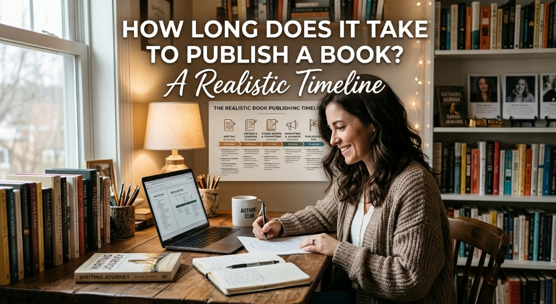

Publication of a book is indeed a very exciting thing. However, this process can take much more time than most writers initially assume. Planning, preparing, and executing each step of the way is mandatory in order for the process of book publishing to occur efficiently. This process can vary depending on the size of the book, editing, publishing process, and marketing plans.
How Long Does It Take to Publish a Book?
It normally takes several months up to a year or even longer for a book to get published based on the level of readiness of the manuscript and the approach that an author takes in getting the book published. An author with a well-prepared manuscript using self-publishing can manage to publish within several months only.
It all depends on the author. Short e-books can take a shorter time to be published compared to novels.
What Are the Main Stages of Book Publishing?
The book publishing process involves several stages, and each contributes to the final quality of the book. Knowing what happens at each stage helps authors organize their workload and estimate how much time they need.
See also: How to Prepare for a Salary Negotiation
1. Manuscript Completion: 1–12 Months or Longer
Writing and completing the manuscript is often the most unpredictable stage. Some authors already have a finished draft, while others need several months to develop their ideas, conduct research, and complete the first version.
The timeline depends on writing habits, book length, research requirements, and available time. Authors should avoid rushing this stage because an incomplete or poorly developed manuscript can create additional revisions later.
2. Editing and Proofreading: 2–4 Months
Editing improves the manuscript’s structure, clarity, grammar, consistency, and readability. Depending on the book’s condition, authors may need developmental editing, copyediting, and proofreading.
Developmental editing addresses broader issues, such as plot, organization, and content flow. Copyediting focuses on language, grammar, and consistency, while proofreading identifies remaining errors before publication.
Allowing sufficient time for revisions is essential. Authors who submit incomplete drafts or delay responding to editorial feedback may experience longer production schedules.
3. Cover Design and Book Formatting: 2–6 Weeks
Cover design and interior formatting prepare the manuscript for its intended format. A professional cover communicates the book’s genre and appeals to its target audience, while proper formatting ensures a readable experience.
Ebooks require layouts that adapt to different screens, whereas print books need accurate page dimensions, margins, and typography. Authors publishing through Kindle Direct Publishing (KDP) must also follow the platform’s file requirements.
4. ISBN, Metadata, and Distribution Setup: 1–3 Weeks
Before publication, authors need to prepare essential book information, including the title, author name, description, categories, and keywords. Print editions may also require an ISBN, depending on the publishing route and distribution plan.
For authors using Amazon KDP, uploading the manuscript and cover files is part of the publishing setup. Reviewing the digital preview and checking the print proof, when applicable, can help prevent formatting and production problems.
What Is the Difference Between Self-Publishing and Traditional Publishing Timelines?
The two publishing methods have different time frames, roles, and processes for gaining approval. The self-publishing process offers the author more control, whereas traditional publishing generally includes more selection and acquisition processes.
| Publication Stage | Self-Publishing | Traditional Publishing |
| Preparation of the manuscript | Under control of the author | Coordination of the author and the publisher |
| Revision by the publisher or literary agent | No requirement in general | Can be lengthy |
| Editing and designing | Schedule by the author | Schedule by the production process of the publisher |
| Timeline of the production stage | Generally a few months after finishing the manuscript | Generally 12-24 months after acquisition |
| Date of publication | Flexible | Generally set by the publisher |
These timelines are estimates only. Traditional publishing takes more time when the author has to find an agent or an offer. Self-publishing also takes time when a manuscript needs extensive editing or production revisions.
Why Do Some Books Take Longer to Publish?
Several factors can extend the publishing timeline, even when an author has already completed the manuscript.
- Extensive revisions: Major changes to the manuscript may require another round of editing and proofreading.
- Delayed feedback: Waiting for editors, designers, or reviewers can interrupt production.
- Complex formatting: Illustrated books, workbooks, and books with charts may require additional layout work.
- Distribution requirements: Different retailers and print providers may have separate file specifications and review procedures.
- Unplanned changes: Revising the title, cover, or manuscript late in production can push back the launch date.
Authors can reduce avoidable delays by finalizing the manuscript, agreeing on project milestones, and reviewing files promptly.
How Can Authors Create a Realistic Publishing Schedule?
A realistic publishing schedule begins with the desired release date and works backward through each production stage. Authors should include time for revisions, approvals, and unexpected changes instead of planning around an ideal scenario.
For example, an author with a completed manuscript might allocate three months for editing, design, formatting, and publishing preparation. A more complex project may need six months or longer.
Working with experienced ebook publishers Canada can help authors understand production requirements, coordinate publishing tasks, and establish a practical schedule. However, the exact timeline depends on the manuscript’s condition, selected services, and the author’s responsiveness.
Authors should also distinguish between the date a book becomes available and the date its marketing campaign begins. Advance promotion, review copies, and launch materials may need to be prepared before publication.
When Should Authors Start Planning Their Book Launch?
Authors should begin launch planning well before the publication date. Ideally, marketing preparation should overlap with the later stages of editing and production, provided the book’s title, positioning, and release details are sufficiently established.
A launch plan may include an author website, email announcements, social media content, advance reader copies, and retailer descriptions. Authors using KDP should also review their listing details and understand the platform’s publishing and review process before setting expectations for release.
By preparing early, authors can eliminate stress from having to create their whole marketing strategy at the time that the book is out.
For information about manuscript preparation, book publishing, and marketing, please visit:
Conclusion
The amount of time needed to publish a book is determined by how ready the book manuscript is, how it is going to be published, what production needs there are, and what launch plan is set up. While some books are available after a few months of work, other books may take a year or more to be published.